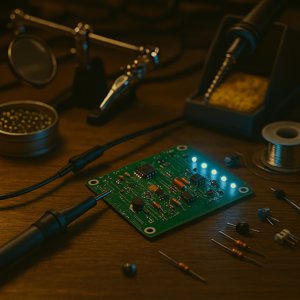

Good soldering is as much art as science. A clean joint starts with clean components — oxidation or residue can prevent solder from flowing.
Heat the joint, not the solder: touch the iron to the pad and component lead, then feed solder into the heated area so it flows smoothly. Shiny, concave joints mean success; dull, lumpy ones usually mean a cold joint.
Invest in a decent soldering station with adjustable temperature, and don’t skimp on safety — always work in a ventilated space, and wash your hands after handling solder.
With practice, soldering becomes second nature, and your projects will thank you for it.